
Education and training have become a strange category to market.
On paper, demand should be obvious. Europe needs digital skills. France needs green and AI-ready talent. Companies need to upskill people faster, retain teams longer, and adapt to changes that their internal systems were not always built to absorb. [1][2]
And yet, many education and training providers still approach growth as if the main issue were volume: more visibility, more campaigns, more form fills, more webinar registrations, and more leads to pass to Sales.
The problem is that B2B education is not a simple volume game.

“Companies are not just buying a course. They are buying a way to reduce skills risk, support transformation, and justify training spend internally.”
So the real question in 2026 is not:
How do we generate more leads?
It is:
Can we build enough trust, proof, and operational discipline to turn market need into qualified pipeline?
That is a different problem. And it requires a different system.
1. The market does not lack demand. It lacks clarity.
The need is already there.
Cedefop’s 2035 skills forecast shows a European labour market increasingly shaped by the digital and green transitions, with demand moving towards higher-level skills. [1]
In France, the OECD estimates that 30.9% of workers are exposed to generative AI, meaning at least 20% of their tasks could be done in half the time with GenAI support. In Île-de-France, that figure rises to 41.5%. [2]
This changes the role of professional training. It is no longer just an HR benefit or a catalogue of courses. It is becoming part of how companies manage productivity, retention, internal mobility, and skills shortages.
But there is a trap here.
When demand feels obvious, providers can assume the market will understand their value on its own. It usually will not.
A company may know it needs AI training, data literacy, cybersecurity awareness, management development, or green skills. That does not mean it knows which provider to trust, which format to choose, how to prove ROI, or how to align the programme with business priorities.
This is where many education brands lose momentum. Not because the market is absent, but because the path from need to decision is not clear enough.
Key idea: In B2B education, market demand does not automatically become a commercial pipeline.
2. France is not a normal lead-generation market
France adds another layer of complexity.
Professional training is shaped by funding mechanisms, certification rules, apprenticeship policy, CPF usage, OPCOs, France Compétences, and regular regulatory changes.
France Compétences reported that more than 1.3 million CPF-funded training applications were validated in 2023, for more than €2 billion committed. [3] Its 2024 activity also included revisions to apprenticeship funding levels, generating around €140 million in savings. [4]
This is not just administrative background. It changes how growth works.
When funding rules move, employers hesitate. When apprenticeship support changes, timing changes. When certification quality is scrutinised, proof matters more. When budgets are tighter, generic training promises become weaker.
In France, the go-to-market strategy for education is also funding literacy.
“A provider that only sells course features will struggle against one that helps employers understand timing, financing, compliance, skills priorities, and expected outcomes.”
That is why a simple “run ads and collect leads” model is too shallow. You cannot solve a policy-shaped, high-trust B2B market with landing pages alone.
Key idea: In France, education growth depends on understanding the funding and regulatory environment, not just the acquisition channel.

3. The buyer wants proof, not a promise
The buyer has changed, too.
HR, L&D, talent, and transformation teams are under pressure to show that learning supports business goals. LinkedIn Learning’s 2024 Workplace Learning Report found that aligning learning programmes to business strategies was L&D’s number one focus area for the second year in a row. [5]
That tells us something important.
The buyer is not only asking whether the training is good. They want to know what problem it solves, why it is worth the investment, how managers and employees will engage with it, and how it supports broader goals such as retention, internal mobility, productivity, or transformation.
This is why B2B education marketing needs to move from catalogue logic to outcome logic.
For example, the message should move from “we offer AI training” to “we help non-technical teams use AI safely and productively in their daily workflows”.
It should move from “we train digital talent” to “we help companies reduce hard-to-fill digital skills gaps through measurable upskilling pathways”.
And it should move from “we are impact-led” to “here is what changed for learners, employers, and the organisations that hired them”.
In B2B education, impact is not a positioning statement. It becomes commercially valuable only when it is evidenced.
Key idea: buyers do not only need inspiration. They need proof they can use internally.
4. Impact needs to become usable proof
This matters even more for impact-led education brands.
Impact is a strong message in France and Europe. It connects to inclusion, employability, access to skills, social mobility, and the need to bring more people into digital and green careers.
But impact alone does not convert a B2B buyer. A company needs evidence.
That evidence might include learner completion rates, skills progression, certification outcomes, employer satisfaction, job placement, internal mobility, retention impact, repeat business, sector-specific case studies, manager feedback, or business outcomes after training.
The point is not to make every education brand sound like a consultancy. The point is to make proof visible and usable across the full funnel.
A good case study should not sit quietly in a PDF. It should shape the website, sales deck, landing pages, nurture emails, retargeting, webinars, comparison pages, and AI-search visibility.
Proof is not something you add at the end. It is what makes the whole growth system more credible.
Key idea: Impact becomes powerful when it is translated into evidence that buyers can trust, share, and defend.
5. CPL is too small a metric for this category
Many organisations still judge acquisition through surface-level numbers: cost per lead, form submissions, landing-page conversion rate, webinar registrations, and download volume.
These metrics are not useless. But in B2B education, they are incomplete.
A cheap lead is not a better lead if it never becomes a serious conversation with the right buyer.

The more useful questions are usually harder:
- Which sectors convert best?
- Which skill needs create urgency?
- Which company sizes have budget?
- Which buyer personas influence the deal?
- Which content creates sales conversations?
- Which campaigns generate qualified meetings?
- Which leads become opportunities?
- Which accounts return?
This is where many education brands need a more mature growth operating system.
Not because marketing should become complicated for the sake of it. Because the buying journey already is.
An HR manager may research the topic. A business leader may own the urgency. A finance team may validate the budget. A training manager may compare providers. An OPCO or funding mechanism may influence timing. A director may make the final call.
If the CRM is messy, the segmentation is vague, and the follow-up is slow, more lead volume simply creates more waste.
Growth does not fix unclear systems. It amplifies them.
Key idea: In B2B education, the best metric is not lead volume. It is the quality of the path from demand to pipeline.
6. Seasonality is real, but trust cannot be seasonal
Education and training have natural cycles.
In France, those cycles are often linked to rentrée, apprenticeship calendars, annual training plans, HR budget cycles, funding windows, regulatory changes, and sector-specific transformation priorities.
France Travail’s BMO 2026 survey collected nearly 416,000 responses across France to analyse recruitment needs by sector and employment area. [6] That matters because training demand is often connected to hiring pressure, talent shortages, and operational planning.
But seasonality can create a bad habit: waiting too long to build demand.
“The risk is that marketing starts too late. Buyers may already be comparing options, building internal cases, or discussing providers before a campaign even goes live. When that happens, paid media and sales follow-up have to compensate for the trust that should have been built earlier.”
A stronger approach is to prepare the market before the buying window opens.
That means educating employers earlier, creating familiarity over time, and making the future sales conversation easier.
For example:
- A digital skills school could run webinars before the rentrée period to explain apprenticeship timelines, funding options, and the profiles employers can realistically recruit.
- An AI training provider could help HR teams identify which roles need upskilling before the annual budget is finalised.
- A cybersecurity provider could create sector-specific pages for finance, healthcare, or retail, where risks and compliance expectations are different.
Seasonality should shape planning. It should not become an excuse for last-minute acquisition.
Key idea: Education brands should not wait for the buying window to start building trust.
7. AI search adds a new visibility problem
B2B buyers still use Google, LinkedIn, peer recommendations, events, newsletters, and direct referrals. But AI-assisted search is becoming another layer in the research process.
A buyer might use AI search to ask which providers can support AI upskilling, how to structure a company-wide training programme, or what to look for when comparing data, cybersecurity, or digital skills providers.
This does not mean SEO is dead. It means SEO is no longer the only visibility layer.
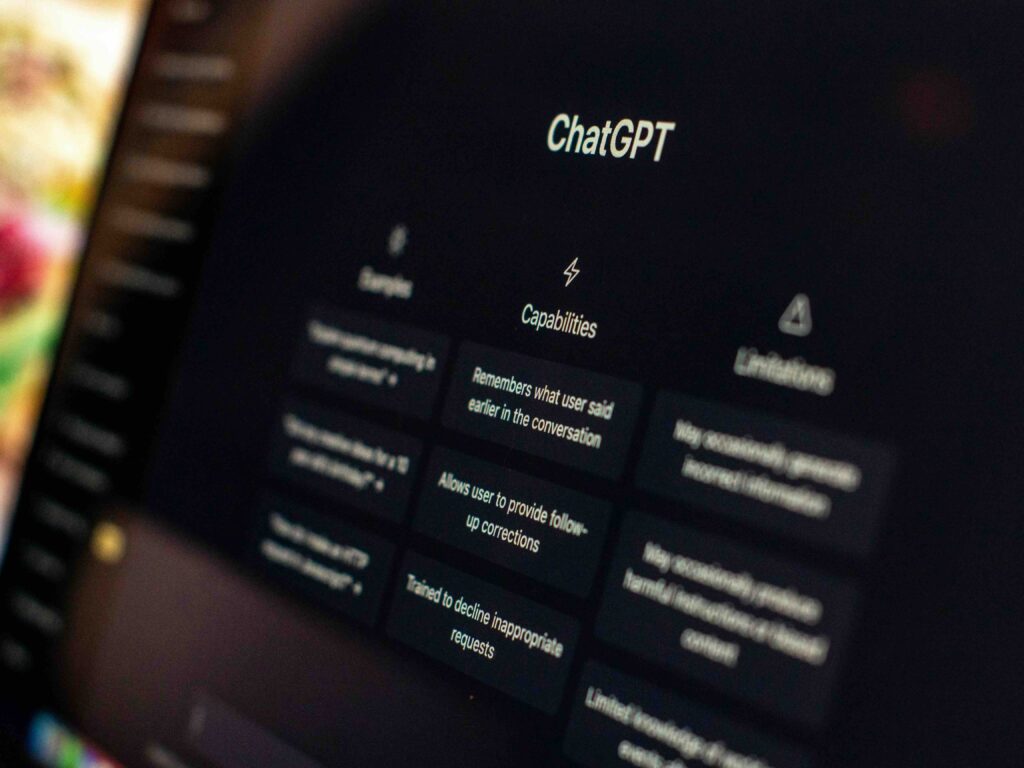
Education brands need to be easy to understand, both for people and for AI systems. That means building a clearer content layer around:
- Clear positioning
- Structured programme pages
- Specific use cases
- Sector-focused content
- FAQs that answer real buyer questions
- Comparison pages
- Employer case studies
- Outcome data
- Recognised certifications
- Credible third-party mentions
The brands that win in AI search will not necessarily be the loudest. They will be the easiest to understand, trust, and cite.
For B2B education, this matters because a lot of the decision-making happens before a form is submitted. By the time a buyer speaks to Sales, they may already have formed an opinion.
The question is whether the brand was visible and credible during that invisible research phase.
Key idea: SEO and GEO are not just traffic channels. They are part of the trust-building layer. For a deeper look at how AI search changes brand visibility and credibility, you can read my article on GEO here.
8. What a growth operating system looks like
A serious growth operating system for B2B education brands in France and Europe needs several layers.
Market intelligence
The provider needs to understand where demand is structurally rising: AI, data, cybersecurity, green skills, industrial transformation, management, internal mobility, hard-to-fill roles, and regional labour shortages.
This should inform positioning, content, targeting, and offer design.
Segmentation
Not all companies buy training for the same reason.
- An SME may need practical support and funding clarity.
- A large group may need scale, compliance, reporting, and stakeholder alignment.
- A tech company may care most about speed and adoption.
- An industrial company may need training that fits operational constraints.
- A public-sector buyer may prioritise accessibility, procurement rules, and framework alignment.
That is why segmentation should not stop at job title. It should also consider sector, company size, maturity, skill need, urgency, funding route, and buying trigger.
Proof-led positioning
Every major claim needs evidence behind it.
Employability, transformation, inclusion, productivity, and business alignment are strong promises, but they only become credible when the reader can see what they mean in practice.
That might mean learner outcomes, placement data, career progression, before-and-after examples, access and completion data, manager feedback, operational improvements, or a clear measurement framework.
Without proof, positioning becomes decoration.
Always-on demand generation
Demand generation should not depend only on campaign peaks.
A stronger system combines SEO, GEO, paid acquisition, LinkedIn, webinars, newsletters, retargeting, partner content, lead magnets, and sales enablement.
The goal is not only to be seen. It is to educate the market before the buyer is ready.
CRM discipline
This is often the least glamorous part of growth, and one of the most important.
A B2B education provider needs clean data, clear lifecycle stages, lead scoring, source tracking, sector tagging, company-level views, and fast handover to Sales.
If the CRM cannot tell the difference between a student, an HR lead, an employer partner, an alumni contact, and an unqualified enquiry, growth becomes noisy very quickly.
Nurturing
Most buyers will not convert immediately.
Nurturing should help buyers understand the problem, compare options, build internal support, and reduce perceived risk.
The role of content is not only to attract. It is to move a serious buyer from interest to confidence.
Sales alignment
Marketing and Sales need shared definitions: what counts as an MQL, what qualifies as an SQL, what makes a meeting qualified, which accounts matter, what the expected follow-up time is, which objections come back repeatedly, and which campaigns create pipeline.
Without this alignment, marketing optimises for activity while Sales complains about quality.
Measurement beyond CPL
CPL is only one small signal.
A better dashboard would include:
- MQL to SQL conversion
- qualified meeting rate
- opportunity creation
- pipeline generated
- pipeline by sector
- pipeline by use case
- sales cycle length
- revenue influenced
- employer repeat business
- cost per qualified opportunity
This is where growth becomes commercial. Better conversion from market need to measurable business value.
Conclusion
B2B education brands in France and Europe are operating in a market full of demand, but not easy demand.
Skills shortages, AI disruption, green transition, apprenticeship funding, CPF usage, regulatory pressure, and L&D accountability all point in the same direction: companies need training, but they also need clarity, proof, and confidence. [1][2][3][4][5]
“That is why the next stage of growth in this category will not belong to the providers that simply generate the most leads. It will belong to the ones who build the strongest operating system.“
The brands that understand the market, segment the buyer, prove the outcome, build trust before the buying window, show up in search and AI-assisted discovery, maintain CRM discipline, align Marketing and Sales, and measure pipeline rather than activity.
In a high-trust, policy-shaped, skills-driven market, growth is not a campaign.
It is an operating system.
💌 If you want the next piece, you can join Conscious Growth Dispatch here.
Sources
[1] Cedefop, Skills forecast 2035: the twin transition and the demographic challenge drive demand for high-level skills, March 2025. Cedefop projects future EU labour-market shifts to be shaped by the digital and green transitions, with demand moving towards higher-level skills.
[2] OECD, Job Creation and Local Economic Development 2024, Country Note: France, November 2024. OECD estimates that 30.9% of workers in France are exposed to generative AI, rising to 41.5% in Île-de-France.
[3] France Compétences, Rapport 2024 sur l’usage des fonds de la formation professionnelle, February 2025. France Compétences reports more than 1.3 million CPF-funded training applications validated in 2023, for more than €2 billion committed.
[4] France Compétences, Publication du Rapport d’activité 2024, June 2025. France Compétences reports work on apprenticeship funding levels, including NPEC revisions that generated around €140 million in savings in 2024.
[5] LinkedIn Learning, Workplace Learning Report 2024, 2024. The report identifies aligning learning programmes to business strategies as L&D’s number one focus area for the second year in a row.
[6] France Travail, Enquête Besoins en Main-d’Œuvre 2026, 2026. France Travail’s BMO survey collects recruitment needs by sector and employment area, with nearly 416,000 responses collected for France.